Best Three.js Websites & Portfolio Examples (2026)
Three.js has revolutionized how developers create immersive 3D experiences on the web. As we move through 2026, we're seeing an incredible surge in creative portfolios that push the boundaries of what's possible with WebGL and Three.js. These portfolios aren't just showcases of work—they're interactive experiences that demonstrate technical prowess, artistic vision, and innovative thinking.
In this article, we'll explore some of the most impressive Three.js portfolio examples from talented developers and studios around the world. Each portfolio demonstrates unique approaches to 3D web design, from smooth animations and particle effects to interactive scenes and creative navigation patterns. Whether you're looking for inspiration for your own portfolio or want to see what Three.js and WebGL are capable of in 2026, these are the portfolios worth studying. And because the best Three.js websites aren't all portfolios, we close with a section on interactive stories, browser games, and immersive experiences too.
Let's dive into these remarkable portfolios and see what makes them stand out in the creative development community.
Bruno Simon (bruno-simon.com)
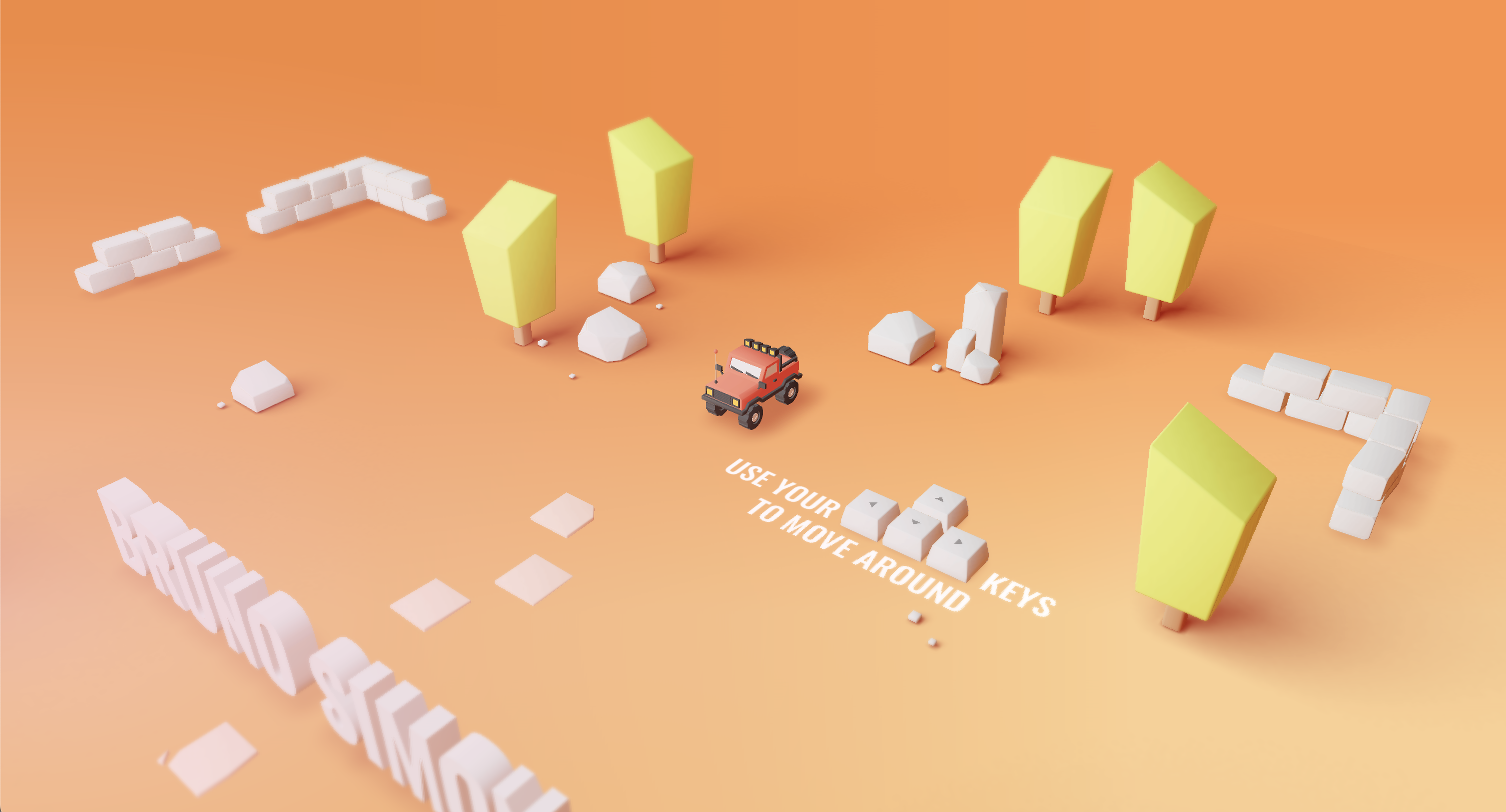
Bruno Simon is widely known as the creator of ThreeJS Journey, a comprehensive Three.js training course. Bruno had initially a portfolio where you can control a vehicle in a scene to learn a little bit more about him and his projects. He decided to completely rework it and showcase the process on his YouTube channel. Not only has he completely improved the visuals of this portfolio by adding some cool effects and catchy graphics, he added some online functionality too. And last but not least, he made his code completely available on his GitHub.
Samuel Honigstein / samsy.ninja
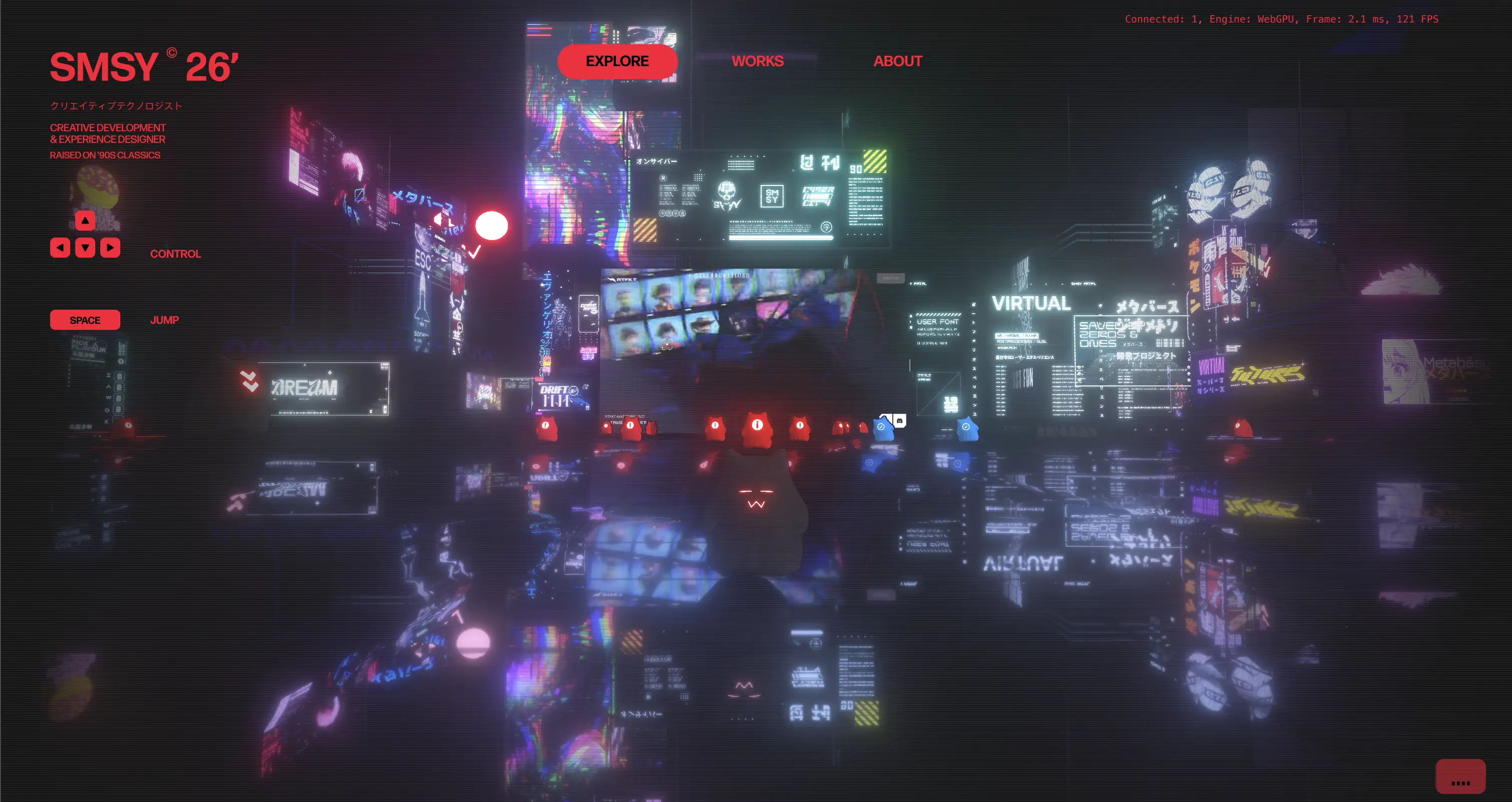
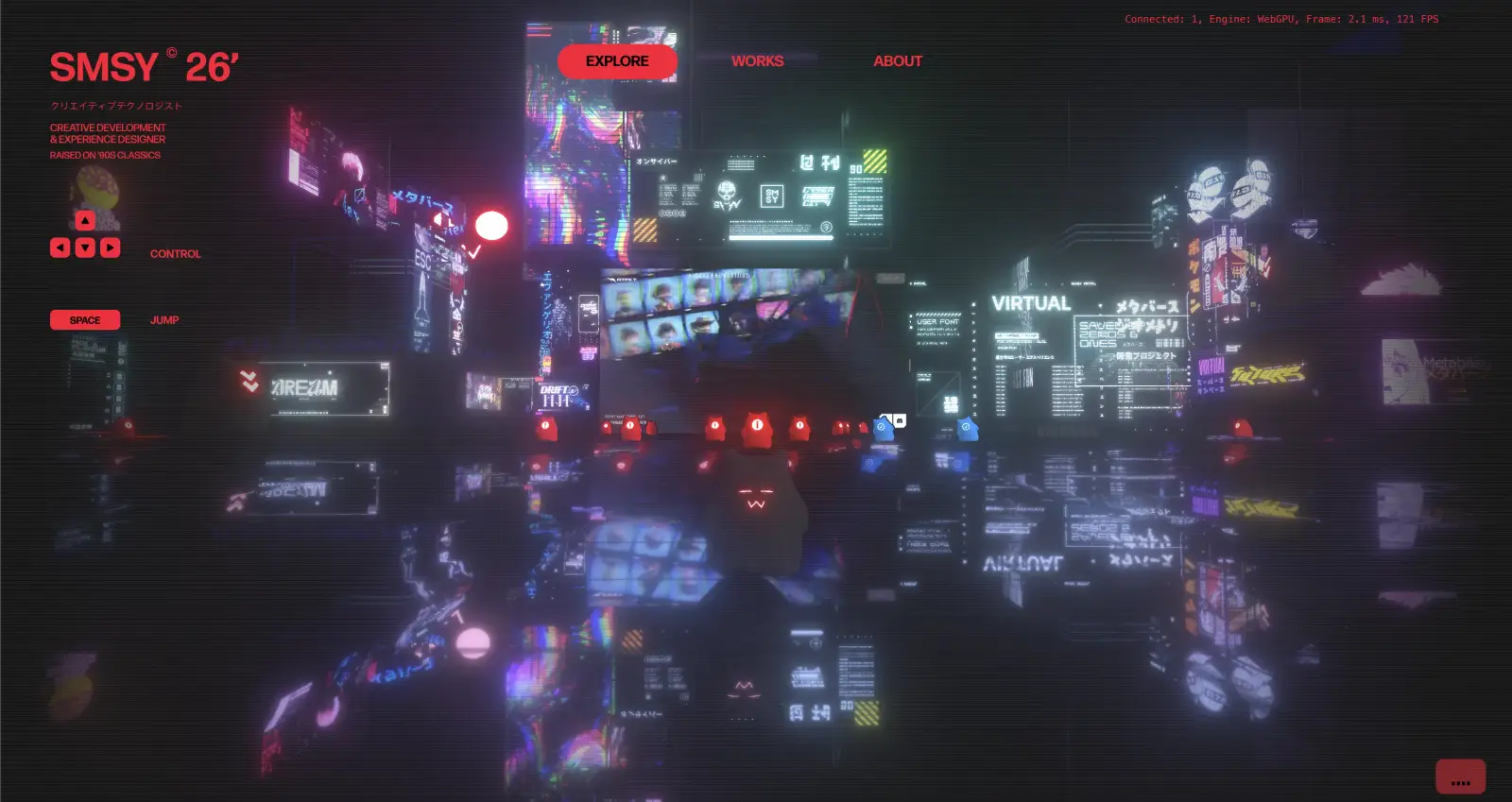
Samsy is a creative technologist whose portfolio showcases a breathtaking cyberpunk 3D world powered by WebGPU, achieving 120+ FPS performance. Visitors explore a neon lit cityscape with first-person controls, featuring holographic interfaces, Japanese design elements, and cutting-edge real-time rendering. This portfolio represents the next generation of web-based 3D experiences, using WebGPU for high quality graphics in the browser.
Bilal El Moussaoui / bilal.show
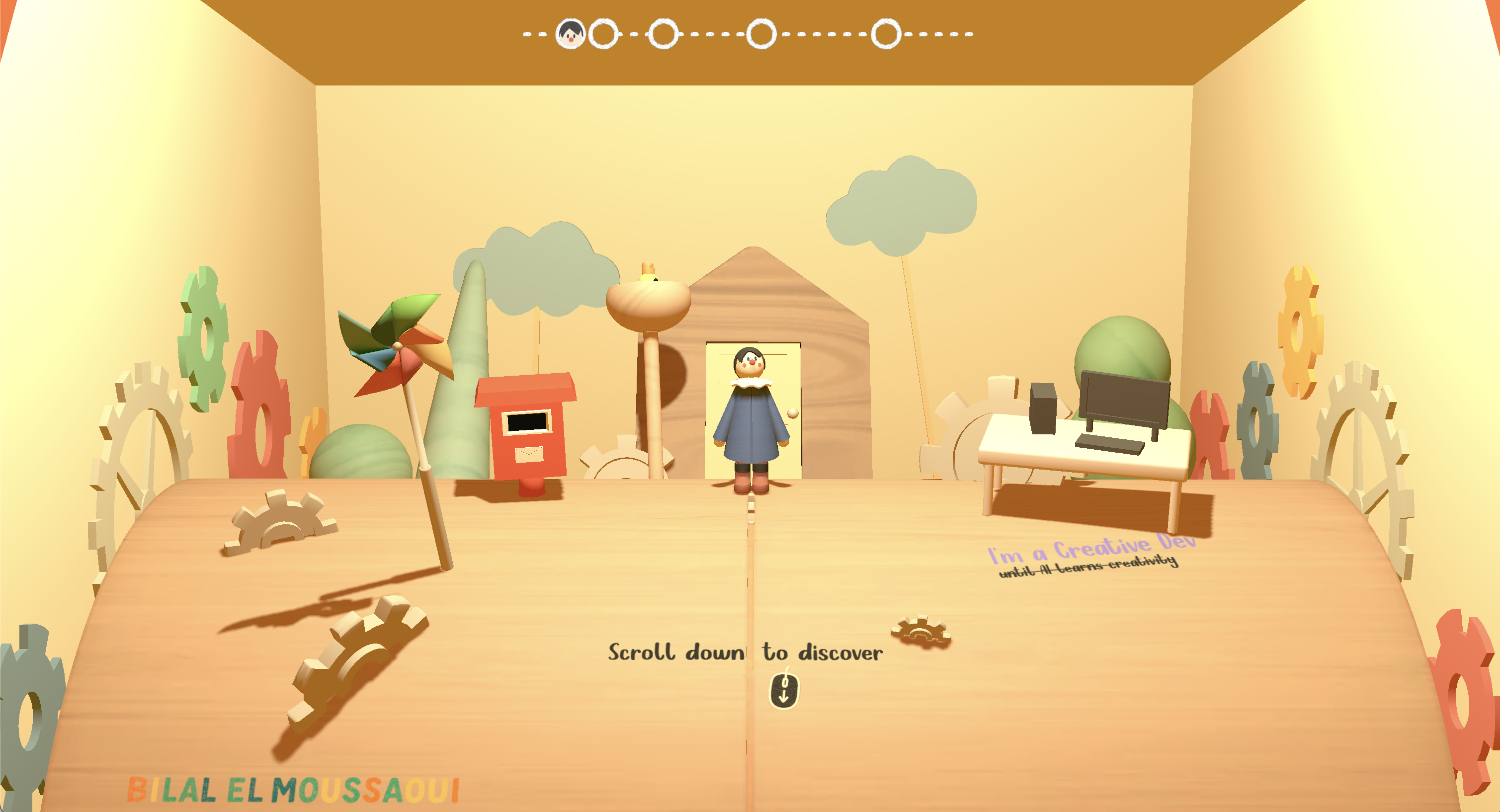
Bilal Elmossaoui creates a scroll driven 3D story where visitors follow a character through a music-box like environment. His portfolio demonstrates that creative developers can be exceptional storytellers with both technical prowess and narrative design. A delightful example of personality driven portfolio design.
Sébastien Lempens / sebastien-lempens.com
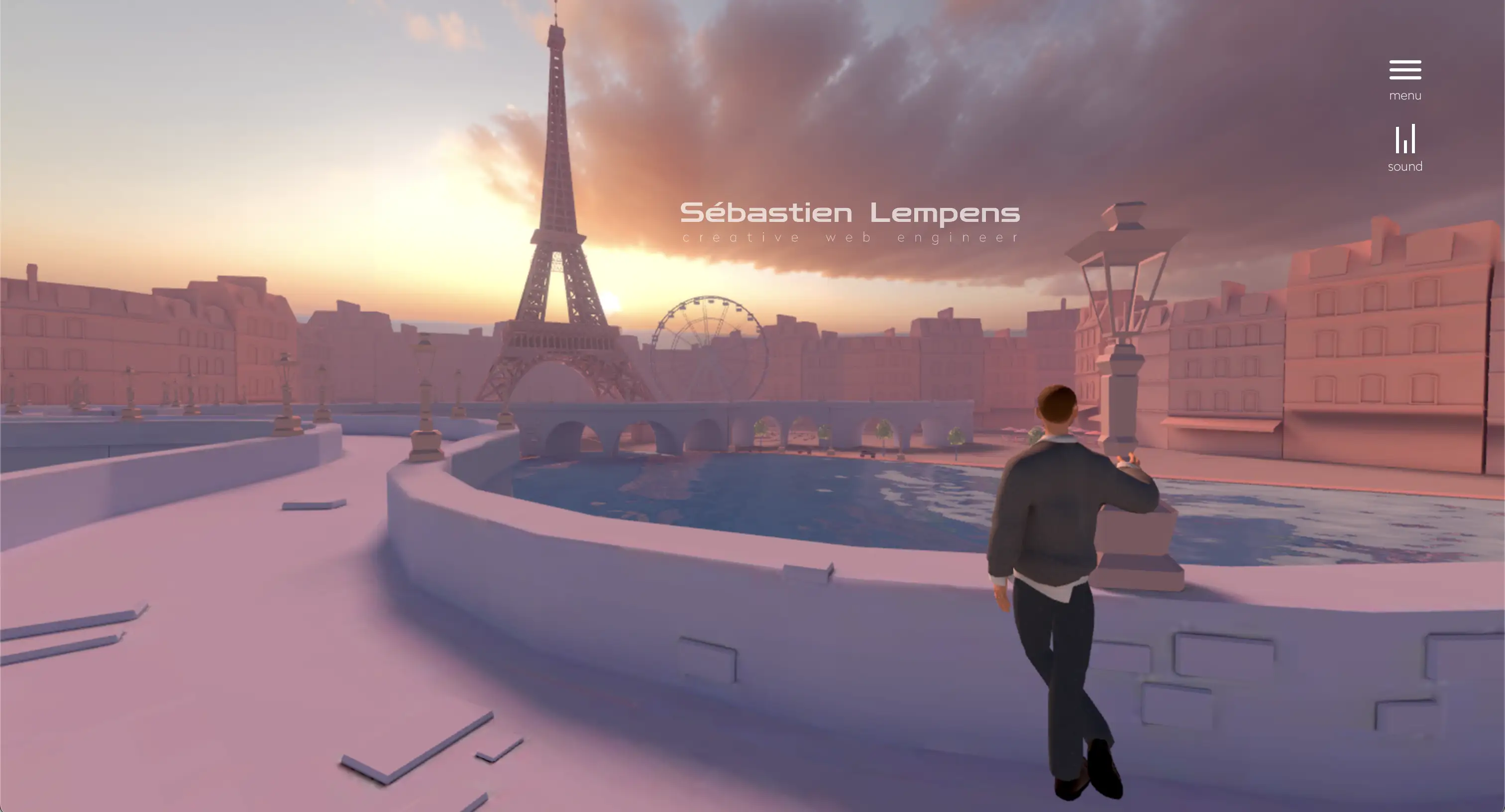
Sébastien Lempens takes visitors on a scroll driven tour through 3D Paris, while revealing his skills and projects. The experience shifts between a first-person camera view, following sebastien on a scooter, and even skydiving creating a dynamic and cinematic journey that keeps visitors engaged throughout.
JReyes MC / jreyes-mc-portfolio.com
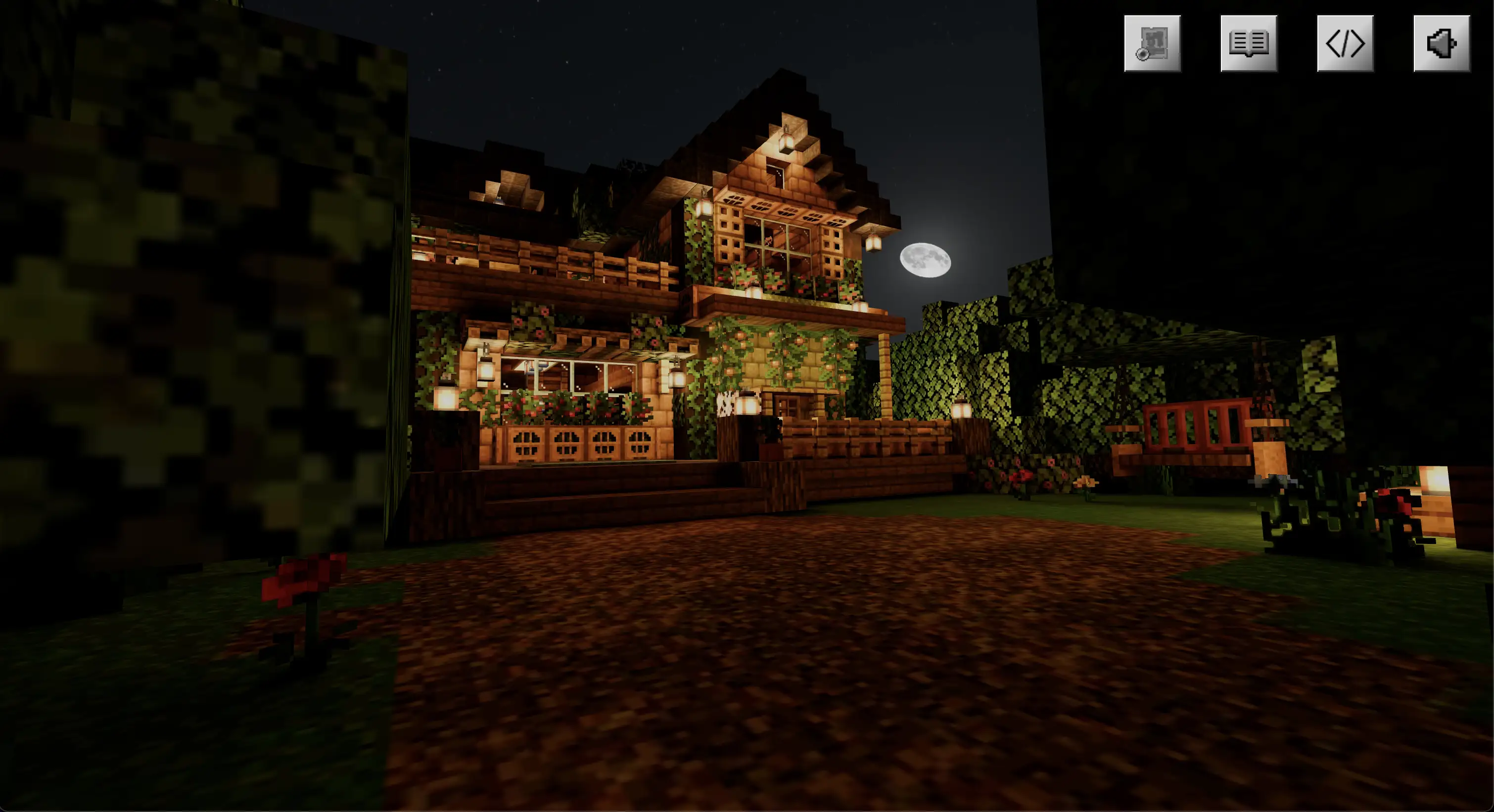
JReyes MC built his 3D portfolio inspired by Minecraft to showcase the creative projects he completed throughout his studies. The user travels through a circuit that allows them to visit the house with each scroll, and each section provides more information about the creator. This portfolio won an Honorable Mention from Awwwards.
Jordan Breton / jordan-breton.com
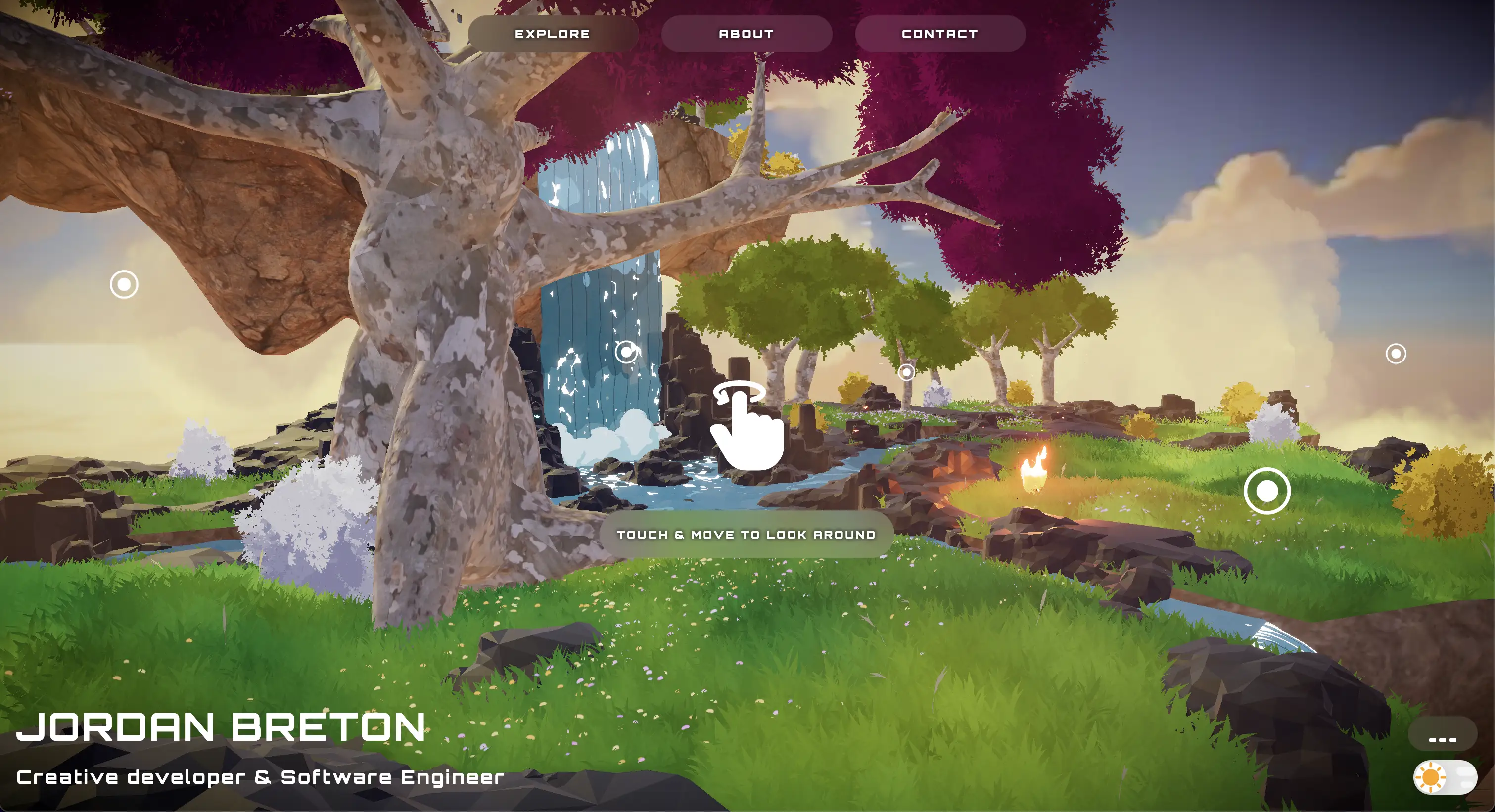
Jordan Breton's portfolio is a floating island in the sky made up of many small elements. Grass, waterfall, fire, wind, trees and even butterflies—all these elements are perfectly rendered on screen and make the experience pleasing to the eye. The user can navigate the scene by moving the camera from fixed point to fixed point, which allows them to discover the scene from all angles. This site won the FWA Site of the Day award on October 2, 2025.
Thibault Introvigne / thibault-introvigne.com

Thibault Introvigne lets visitors control a spaceman in a colorful world. To encourage exploration, he scattered ten collectibles to find throughout the scene. Each one reveals a bit more about his past professional experiences and other projects he's built with Three.js and React Three Fiber. His portfolio draws inspiration from sci-fi works like Blade Runner, Cyberpunk, and The Witness. The latter inspiring the chill atmosphere. An impressive portfolio, especially considering he only discovered creative development five years ago during the COVID lockdown.
Worapat Supameteeworakul / worawork.vercel.app
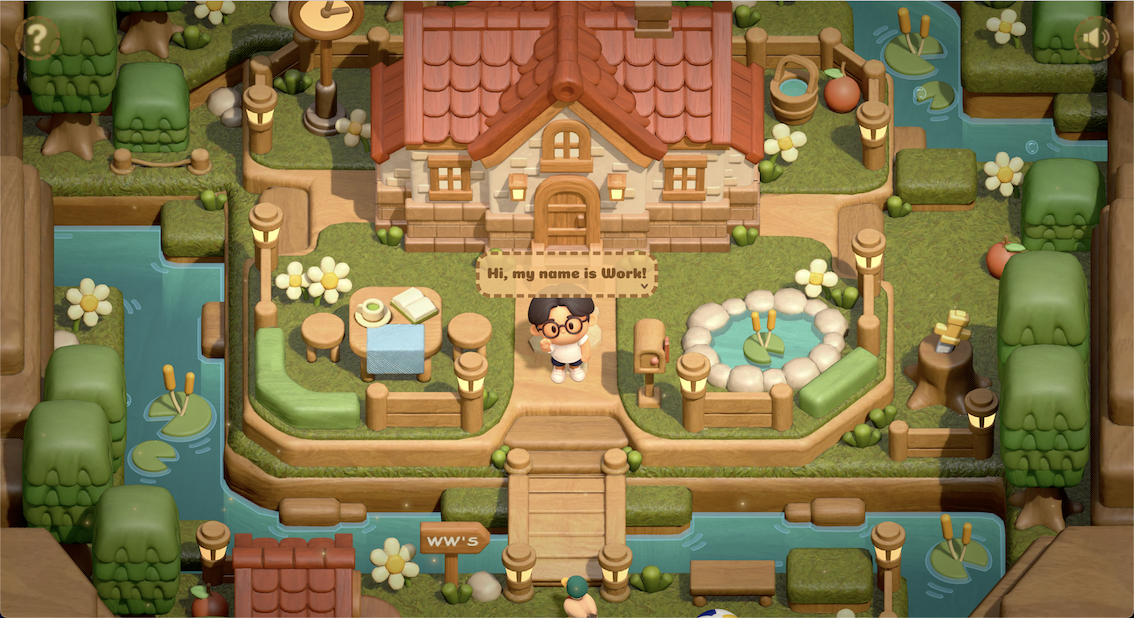
Worapat Supameteeworakul, better known as WoraWork, invites visitors to explore a charming world reminiscent of Zelda: A Link Between Worlds and Animal crossing. Players control a character through a cozy environment featuring a house and garden, where interacting with various elements reveals more about this Thai artist-turned-developer. Originally trained in Interior Design in Thailand before earning a Master's in Art and Design in Japan, Worapat felt constrained by real-world design limitations and started personal art projects like "What_The_Bed" to unleash his imagination on fantasy interiors. In 2021, he joined Earthshine Studio as a 3D Artist, where discovering shaders and programming sparked a revelation: art becomes so much cooler when people can interact with it, not just look at it. This insight led him to learn Unity, Godot, and eventually Three.js to build the interactive worlds he now creates.
Aimee Weis / aimees-papercraft-world.com
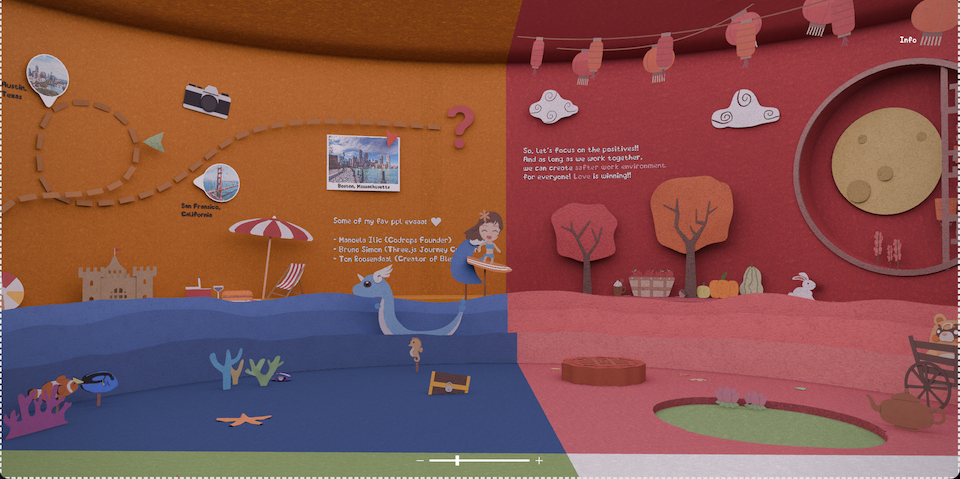
Aimee's Papercraft World is a scroll-driven portfolio where visitors follow a character along a looping path through a charming hand-drawn papercraft environment. Built by Andrew Woan as an open tutorial project using React Three Fiber, Blender, and Krita, the experience blends illustrated 2D assets baked onto 3D geometry to achieve a distinctive notebook-paper aesthetic. Every element, from the character to the surrounding world, feels like it was carefully cut out and assembled by hand, making it a delightful showcase of how artistic illustration and creative development can come together in the browser. The full source code and Blender files are available on GitHub for anyone looking to learn from or build upon the project.
Xianyao Wei / weisdevice.xyz

Weisdevice is the portfolio of Xianyao Wei, a name borrowed from "V" of Cyberpunk 2077. You land on a scene with a small island with a robot. You can play with elements, knobs, gameboy pad, switch ,etc. Under the hood, it's Three.js and GLSL shaders for visuals, Howler.js for audio, and GSAP for transitions. Wei also thought carefully about performance: raycasting runs at 30 FPS, the render loop pauses when you open a project page, and assets are lazy-loaded throughout. He documented some of the stranger engineering decisions in a Codrops case study if you want to go deeper.
Ameen Abdullah / ameen-abdullah.dev

Ameen Abdullah opens with a WebGPU sakura scene petals as a loading screen. Then you land on a beautiful sakura tree scene on a small island with water all around. If you scroll down you will be able to see abdullah's previous work. The website use vuejs and is an Awwwards wining website.
Jay Ransijn / jayransijn.com
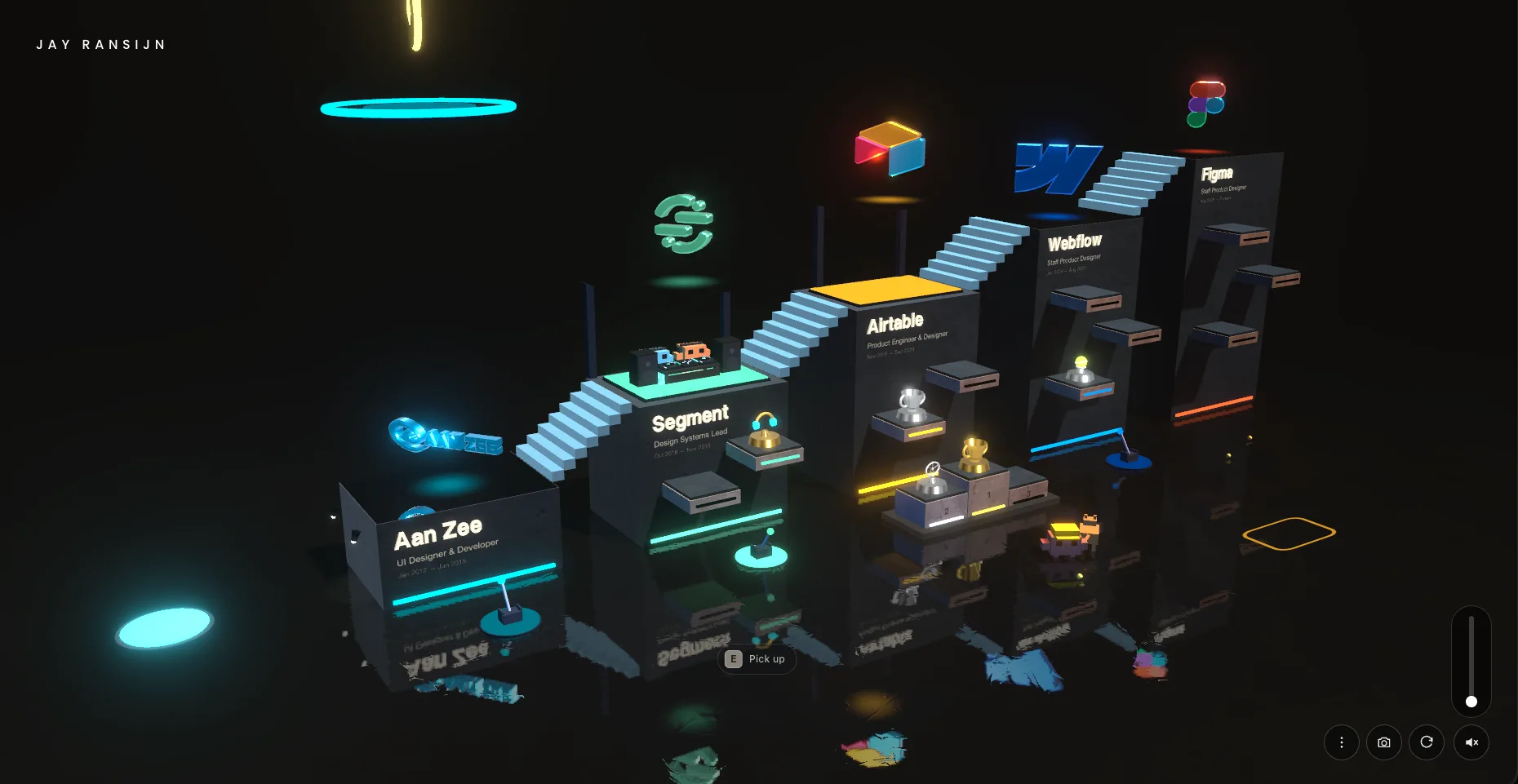
Jay Ransijn, a design engineer with fifteen years of experience, built a fully playable 3D world instead of a traditional portfolio. You control a character who can play fetch with a dog, ride a bike, and drive around looking for a car hidden somewhere in the scene. You can even action a lever to make a band play music, and knocking into the logos of his past companies sends them tumbling across the ground. On top of the gameplay, the scene stands out for its reflections and lighting, giving the whole world a polished finish.
Beyond portfolios: interactive Three.js experiences & games
Search for the best Three.js websites and you'll mostly find portfolios. But they're only a slice of what people are building with WebGL. A lot of the most interesting Three.js work isn't a developer showing off their CV—it's the website itself: a story you scroll through like a film, a game you can play in the browser, a world built around a product or an album. Here are a few where the experience is the whole point.
The Monolith Project / themonolithproject.net
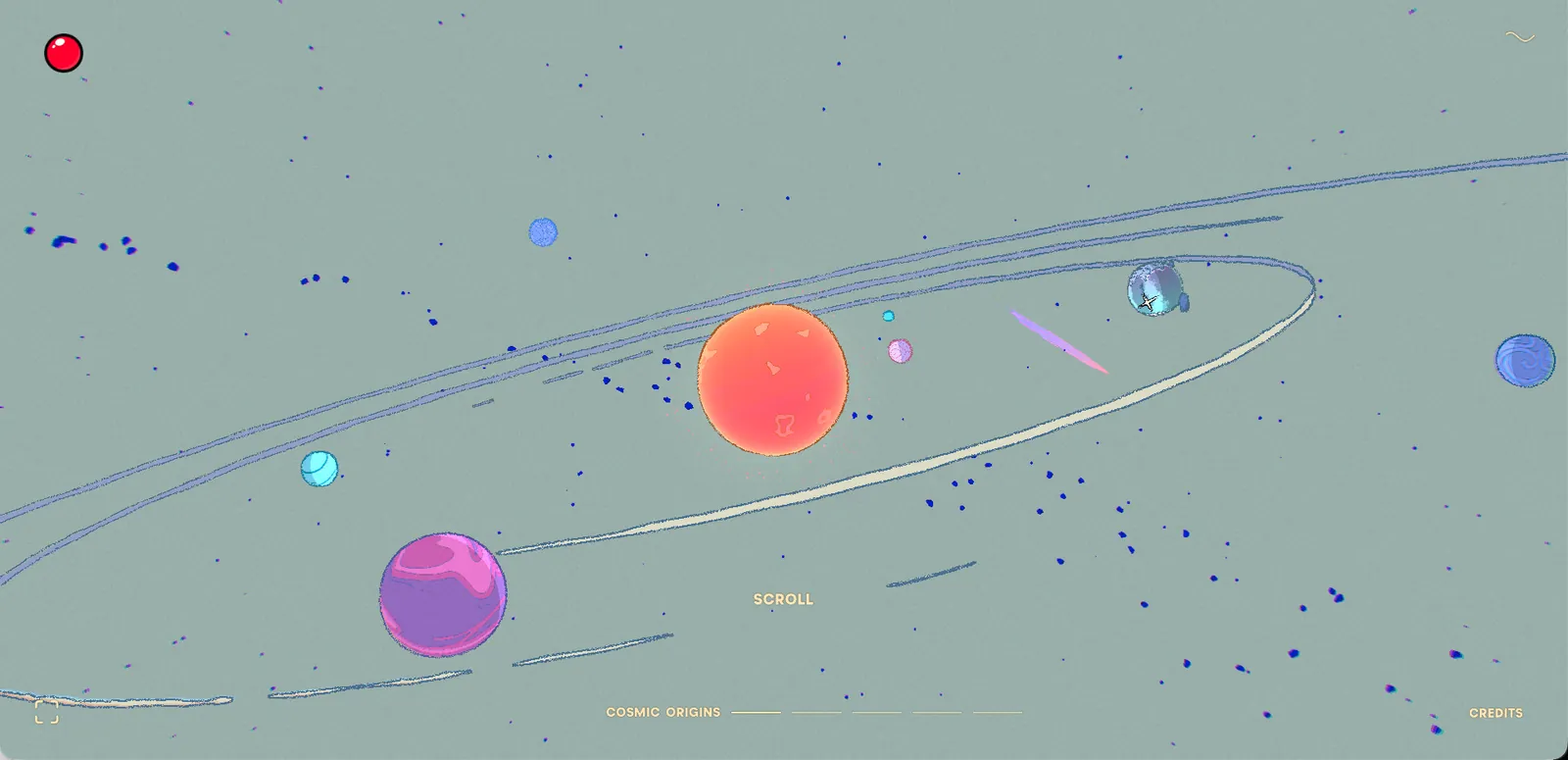
The Monolith Project feels more like a short film than a website. It's a scroll-driven story built with Three.js, React Three Fiber and GSAP that runs across thirteen scenes, moving from hand-drawn sketches into fully lit 3D worlds. The look owes a lot to Moebius and 2001: A Space Odyssey, and it holds that mood the whole way through. The technical side is serious too: a custom shader framework, a GPU particle system and a custom renderer, all of which creator Ethan Chiu wrote up in detail on Codrops. If you want to see how far React Three Fiber can go, start here.
Messenger / messenger.abeto.co
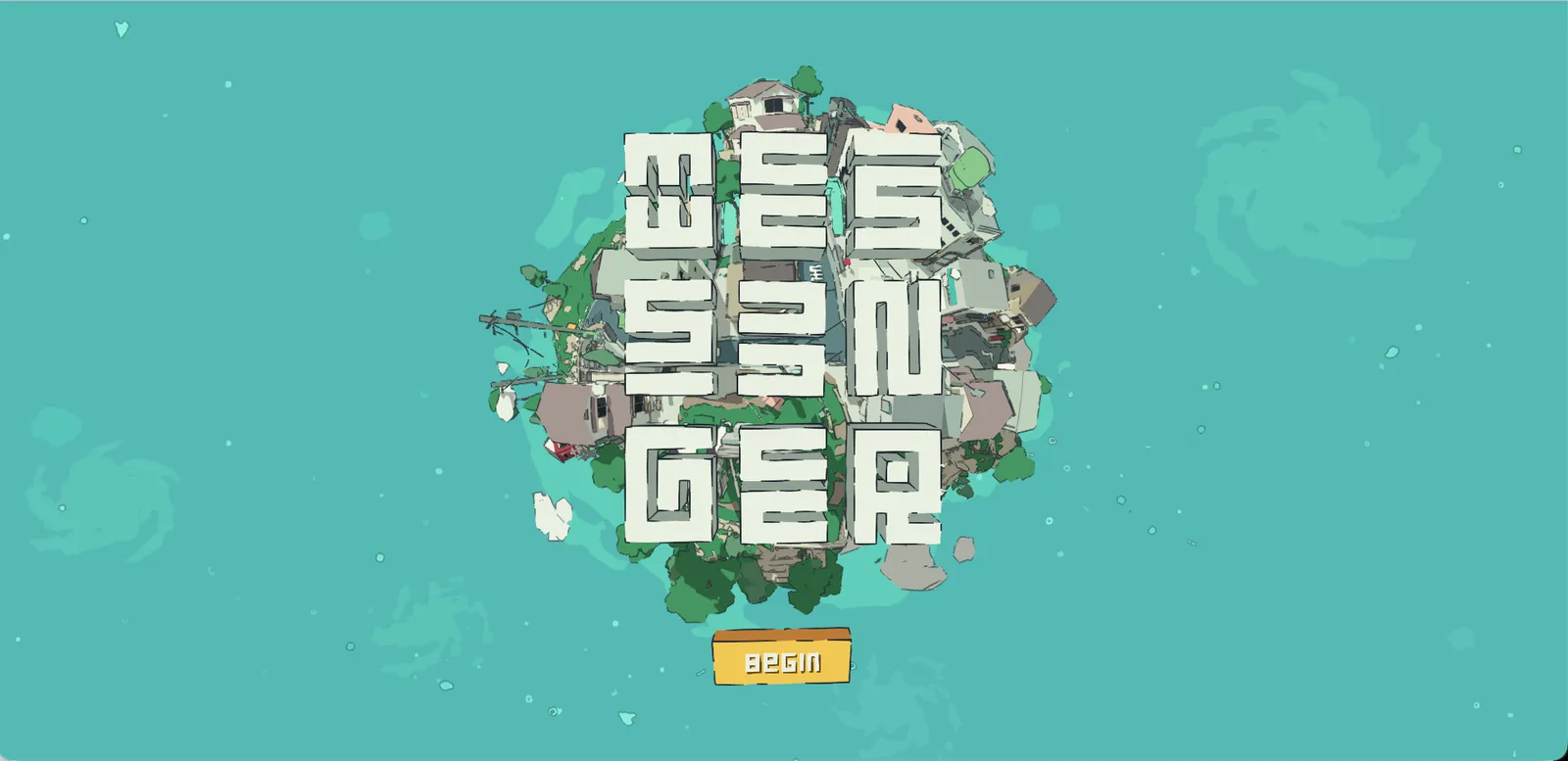
Messenger, published by Abeto and built by Vicente Lucendo and Michael Sungaila, is a small browser game where you play a young mail carrier delivering parcels around a tiny round planet. It's also multiplayer: you'll spot other players exploring the same world and can wave at them with emoji. It runs on Three.js with three-mesh-bvh, models made in Houdini and Blender, and WebSocket multiplayer on Node.js. What's impressive is the restraint. The whole game loads at 5.7 MB and tops out at 17.5 MB, so a rich 3D world never turns into a huge download. It picked up an Awwwards Site of the Day.
Egg Hunt by Merci-Michel / egghunt.merci-michel.com
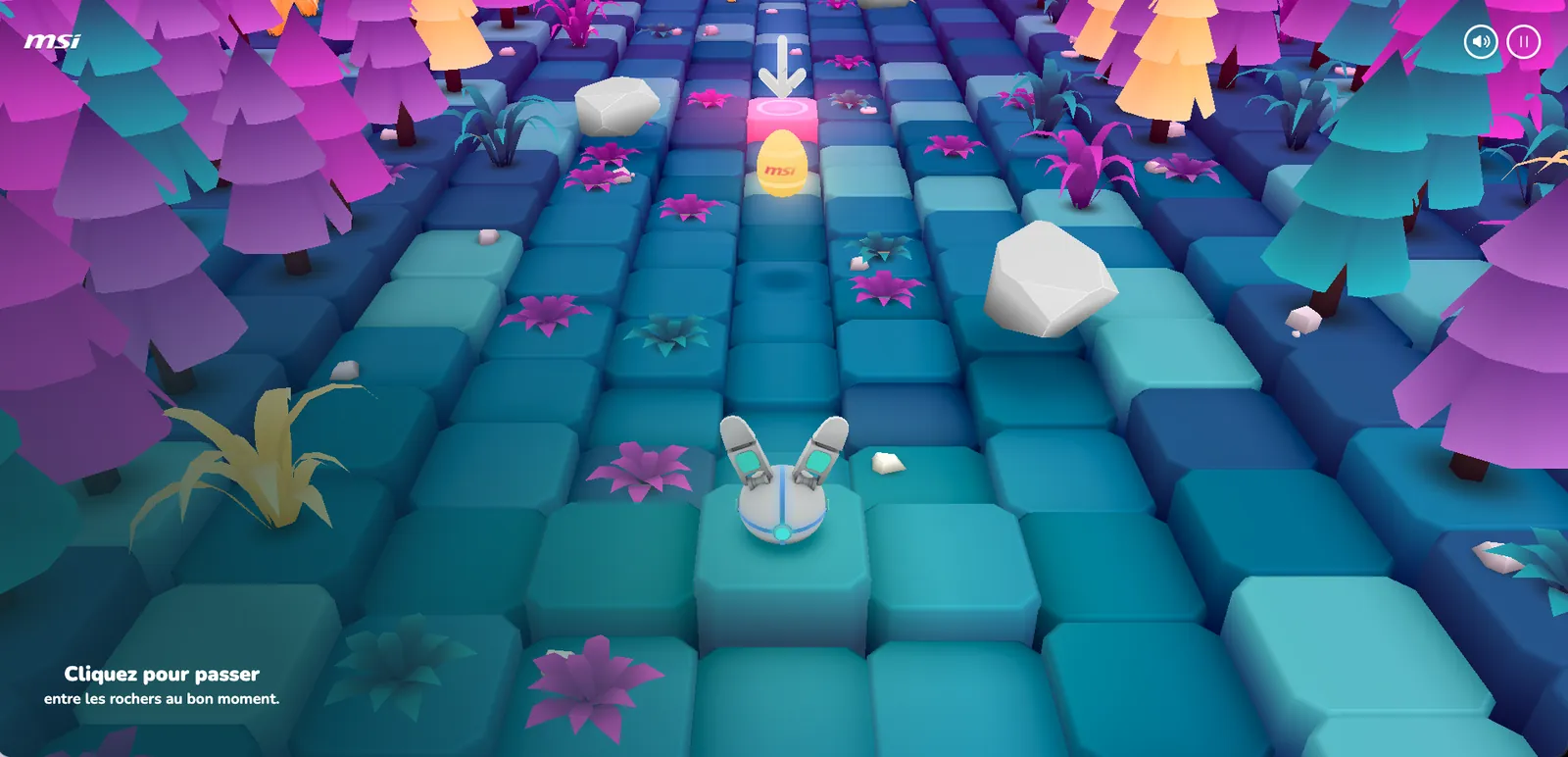
Egg Hunt is a simple, very replayable timing game from Merci-Michel, the Paris studio that's been making web games since 2012. You click to dash between floating rocks and grab golden eggs, and good timing earns you speed bonuses that quickly turn into a high-score chase. It's built with Three.js, WebGL and GSAP on top of the studio's own engine, with assets made in Blender. There's no tutorial and no menu, just one tight little loop that's hard to put down. It also won an Awwwards Site of the Day.
Mola Zone (Yamê) / mola-zone.com
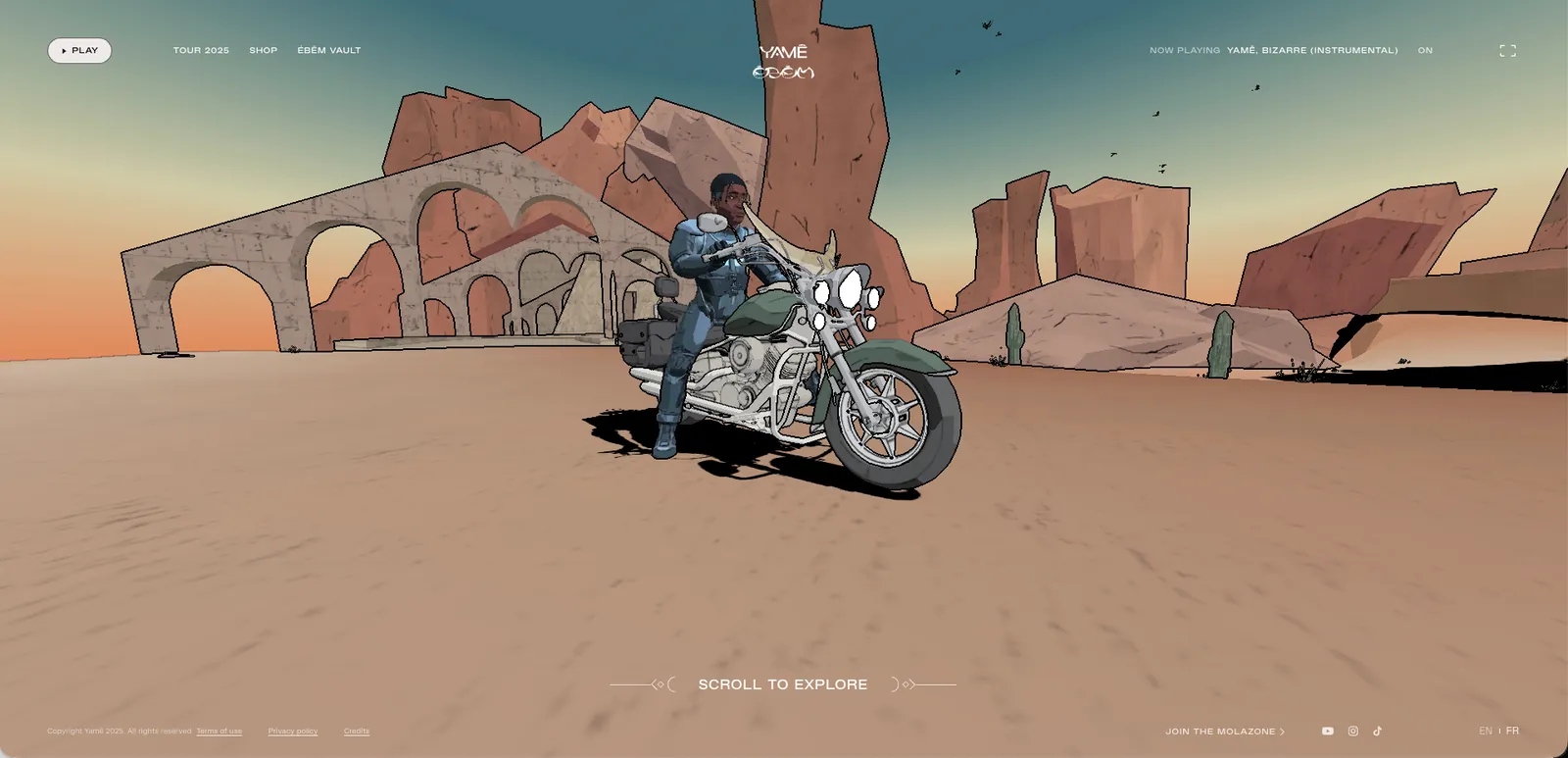
Mola Zone is the site Studio 9P built for French-Cameroonian artist Yamê's album Ebêm. Instead of a static page, it drops you onto a rotating platform where Yamê rides a motorcycle while the world scrolls past, shifting between the desert, forest and palace settings from his short film. You can hop on the bike in a mini-game, hunt for easter eggs in the scenery, and unlock extra content as you go. Every environment was modelled and textured in Blender. It's a good look at how musicians are using Three.js to turn an album into a place you can explore rather than just a tracklist.
Equinox / equinox.space
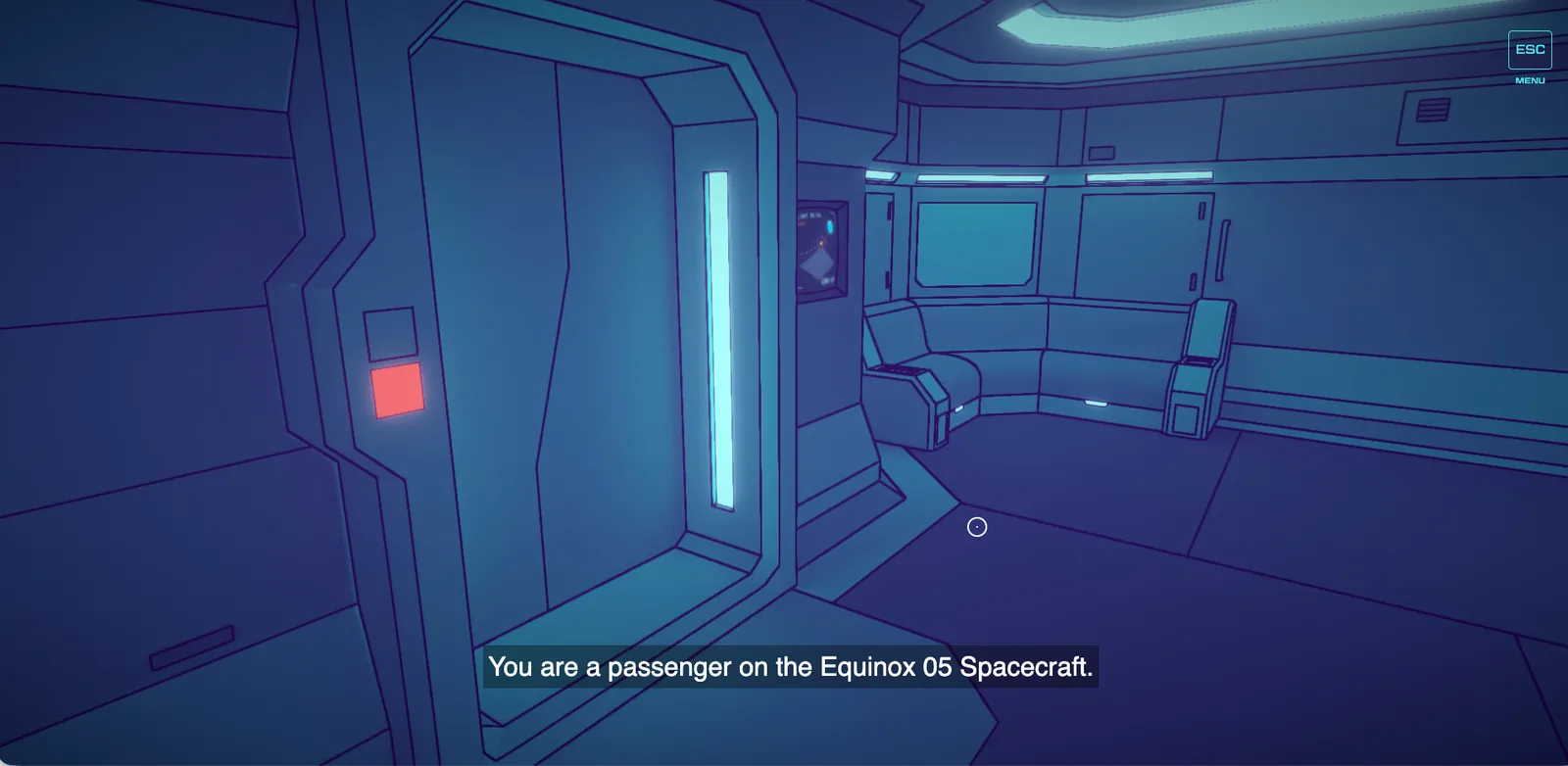
Equinox invites you to take an interactive story among the stars. It's a space adventure from Little Workshop, a studio that's been working with Three.js for years, and it leans on atmosphere and pacing rather than spectacle. The interaction, sound and timing all serve the story, which is part of why it won an Awwwards Site of the Day. Together with The Monolith Project, it's a good reference if you're thinking about how to build a longer narrative in WebGL without losing people along the way.
The common thread isn't the tech, it's the intent. None of these exists to list someone's skills—each one uses real-time 3D to tell a story, sell an idea, or just be fun to play with. For developers, that's the interesting part: there's real demand for Three.js and React Three Fiber work well beyond the portfolio.
If that's the kind of work you want to do—or hire for—take a look at the Three.js developer roles on the board. If you're a company looking to bring this talent in-house, you can hire a Three.js developer directly through CreativeDevJobs.